
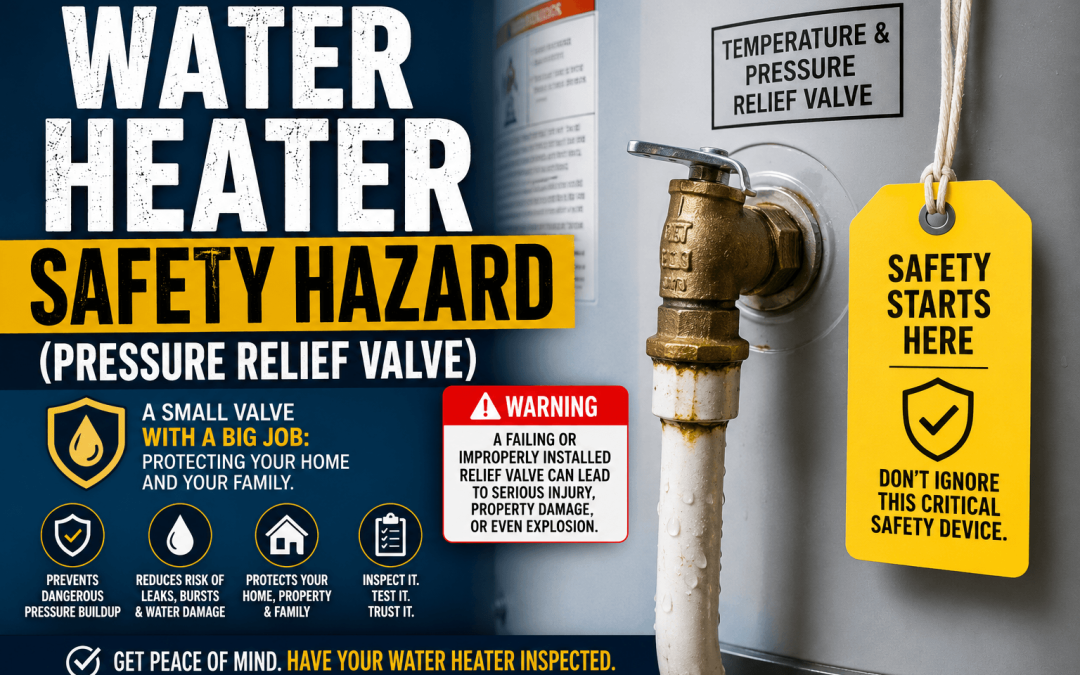
Water Heater Safety Hazard: Understanding the Pressure Relief Valve (TPR)
Your water heater is one of the hardest-working systems in your home, but it can also become one of the most dangerous if critical safety components fail. One of the most important parts of any water heater is the Temperature and Pressure Relief Valve — commonly called the TPR valve or pressure relief valve.
During home inspections throughout South Florida, improperly installed, leaking, missing, or defective pressure relief valves are among the most common safety concerns inspectors discover. While many homeowners overlook this small component, it serves a major purpose: preventing dangerous pressure buildup inside the tank.
What Does a Pressure Relief Valve Do?
As water heats inside the tank, pressure naturally increases. If the temperature or pressure rises beyond safe limits, the pressure relief valve automatically opens to release excess pressure before the tank becomes unstable.
Without a functioning TPR valve, a water heater can become extremely hazardous. In severe situations, excessive pressure can cause the tank to rupture or even explode.
Common Problems Found During Home Inspections
Home inspectors frequently encounter issues involving the pressure relief valve and discharge piping, including:
- Missing discharge pipes
- Discharge pipes made from improper materials
- Pipes installed uphill instead of downward
- Leaking relief valves
- Corrosion around the valve
- Capped or blocked discharge lines
- Discharge pipes terminating in unsafe locations
These conditions can create serious burn hazards or prevent the valve from operating properly during an emergency.
Why This Matters in South Florida
South Florida’s climate creates additional stress on plumbing systems and water heaters. High humidity, corrosion, salt air exposure, and aging equipment can all shorten the lifespan of water heater components.
Many older homes also contain outdated installations that no longer meet modern safety standards. During a real estate transaction, these issues often become negotiation points between buyers and sellers.
Warning Signs Homeowners Should Watch For
Homeowners should never ignore signs of water heater trouble. Common indicators include:
- Water leaking around the tank
- Rust or corrosion
- Popping or rumbling noises
- Inconsistent hot water
- Water stains near the heater
- Dripping from the relief valve pipe
If you notice any of these symptoms, the system should be evaluated by a qualified plumbing professional.
Importance During a Home Inspection
A professional home inspection helps identify visible safety concerns before they become major problems. Inspectors evaluate the water heater’s condition, installation, safety components, venting, and overall operation.
Even though the pressure relief valve may seem like a small detail, it plays a critical role in protecting both the home and its occupants.